Farmington Roofing: Farmhouses and New Subdivisions
Old homesteads and recent tract builds sit a few blocks apart. They need different roofing conversations, and we know both.
Two Very Different Kinds of Roof in One Town
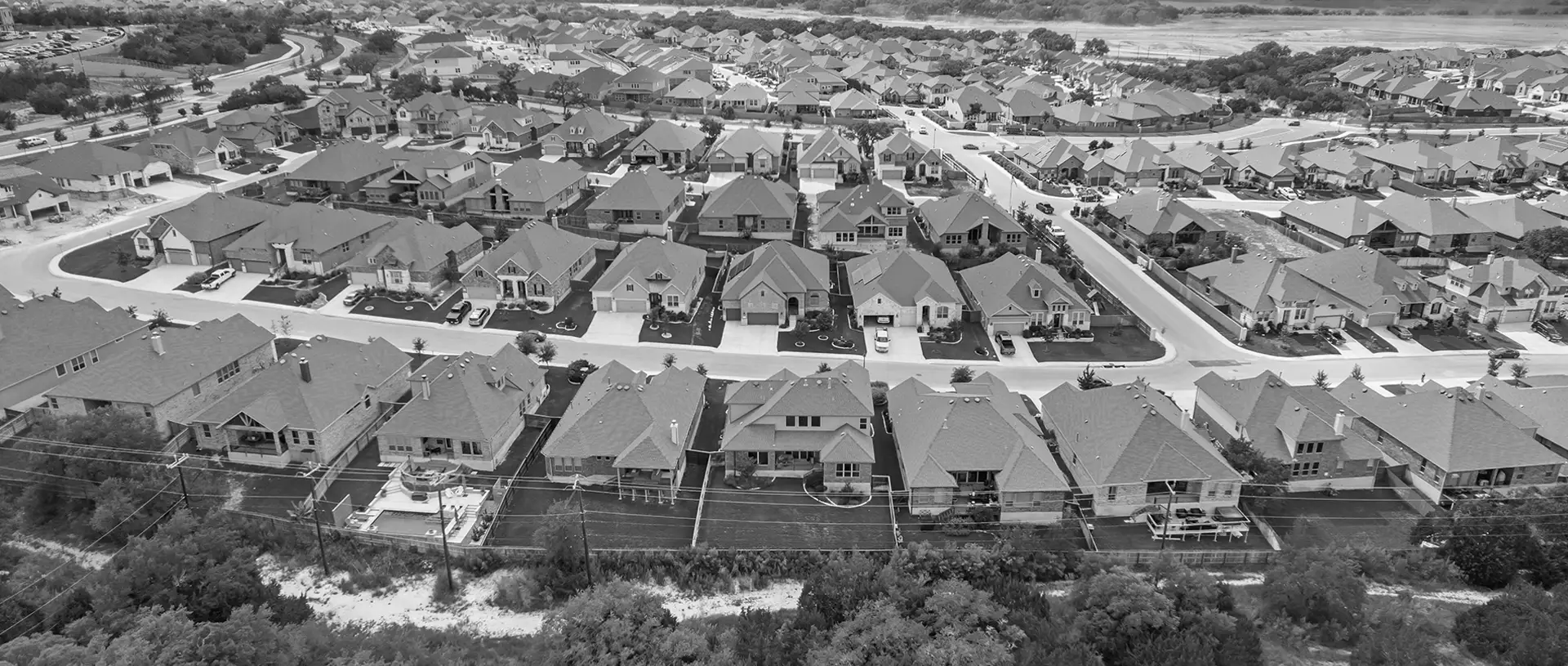
Farmington splits sharply between two housing stocks. On one side, you have farmhouses and older homes built when the population was a few hundred, structures from the mid-twentieth century with original skip-sheathed decking, lower pitches, and roof framing that has settled over decades. On the other, you have subdivision homes built during the 2000s growth surge, when Farmington's population jumped 66% in a single decade.
Those two types of roof call for different approaches. An older farmhouse may need full re-decking before new shingles go on. The rafters may have shifted enough that the roof planes are no longer flat. Flashing around old chimneys and plumbing vents may be corroded through. A newer subdivision home might look fine from the ground but have shortcuts underneath: nails placed too high, missing ice-and-water shield in valleys, starter strips skipped at the eaves.
American Exteriors has worked in this part of Washington County for 25+ years, established in 1998. We operate from our offices in Garfield (15170 U.S. 62, Garfield, AR 72732) and Harrison (1410 Capps Rd, Harrison, AR 72601). We have torn off and replaced both kinds of Farmington roof many times, and we approach each one on its own terms.
Open Valley, Little Shelter
Farmington sits in a wide valley west of Fayetteville. The terrain is open agricultural land, former strawberry fields, grape arbors, and cattle pasture. Unlike the wooded hollows south and east of Fayetteville, there is very little tree cover here to break wind or deflect hail.
Spring storms crossing Washington County reach Farmington roofs with less resistance than homes sheltered by Ozark timber. Hail is the primary damage driver. When a storm drops hail on flat, open ground, every roof in the path takes the same beating. We see uniform damage patterns across entire streets: the same bruised shingles, cracked ridge caps, and dented flashing on house after house.
Impact-resistant shingles rated Class 4 reduce damage from hailstones and may lower your insurance premium. On a Farmington home with no tree canopy overhead, that upgrade pays for itself faster than it would on a sheltered lot in town. We can walk you through the options and help you decide whether the added cost makes sense for your specific exposure.
From Engel's Mill to a Commuter Suburb
Farmington was founded in 1825 and originally called Engel's Mill after a local mill owner. The name changed to Farmington in 1868, reflecting the fertile surrounding farmland. The town was platted around 1870 and incorporated as a city on October 15, 1946.
In the 1890s, Farmington residents grew strawberries and grapes, shipping them out on the Frisco Railroad. The population sat at about 200 in 1940. By 2010, it had reached 5,974, making Farmington the third fastest-growing city in Washington County. Most of that growth came after 2000, when the Fayetteville metro expanded westward and Farmington became a bedroom community for workers commuting to the university, hospitals, and corporate offices.
That rapid build-out matters for roofing. Homes constructed during a boom period tend to be built by the same few production builders using the same subcontractors and materials. When those roofs start to age or take storm damage, they fail in clusters. If your Farmington home was built between 2000 and 2015 and has never been independently inspected, a free look from someone other than the builder is worth your time.
Farmington Areas We Serve
Downtown Farmington
The original core around Main Street where Farmington's oldest structures stand. Homes here date from the mid-twentieth century and earlier, with a handful going back to the pre-incorporation era. Lot sizes are tight, and many homes sit close to the street. Roof access can be limited on the side-yard side, which affects how we stage materials and set ladders. Some of these homes still have the original skip-sheathed decking, spaced boards rather than solid plywood, which means a full re-deck is part of the job when we tear off. We check decking condition on every tear-off and replace or overlay as needed before new shingles go down.
Double Springs
A rural-residential area south and west of the town center. Homes in Double Springs sit on larger lots with more space between structures. The open terrain means roofs here take full wind and hail exposure from every direction, no neighboring buildings or mature trees to absorb impact. We pay close attention to ridge cap installation, eave flashing, and wind-driven rain penetration points on these properties. Staging is easier with more yard space, but the exposure demands a tighter install. Many of these homes are on well water and septic, and we coordinate material delivery to avoid driving heavy trucks over drain field areas.
Heritage Hills
One of the newer subdivisions built during Farmington's growth years. Homes here are predominantly production-built with similar footprints, roof pitches, and shingle selections. When hail crosses Heritage Hills, it tends to damage every roof on the block because the builds and materials are nearly identical. We have worked multiple homes on the same street in this neighborhood after single storm events. If your neighbor's roof was replaced after a hail claim, yours likely took the same hit. Every roof we install comes with a transferable lifetime workmanship warranty, it covers our labor and stays with the house if you sell.
Free Inspection and Estimate
Call (479) 398-6262 or schedule your free inspection online. We will come out to your Farmington property, inspect your roof, document what we find with photos, and give you a written estimate. No charge, no obligation. If there is hail or wind damage, we will walk you through the insurance claim process and handle the paperwork with your adjuster.
Whether your home is a pre-war farmhouse on the old town grid or a 2008 build in one of the subdivisions, we will tell you what your roof needs and what it does not.
Get Your Free Roof Inspection
We look at your roof for free, tell you what we find, and let you decide. No pressure, no obligation.