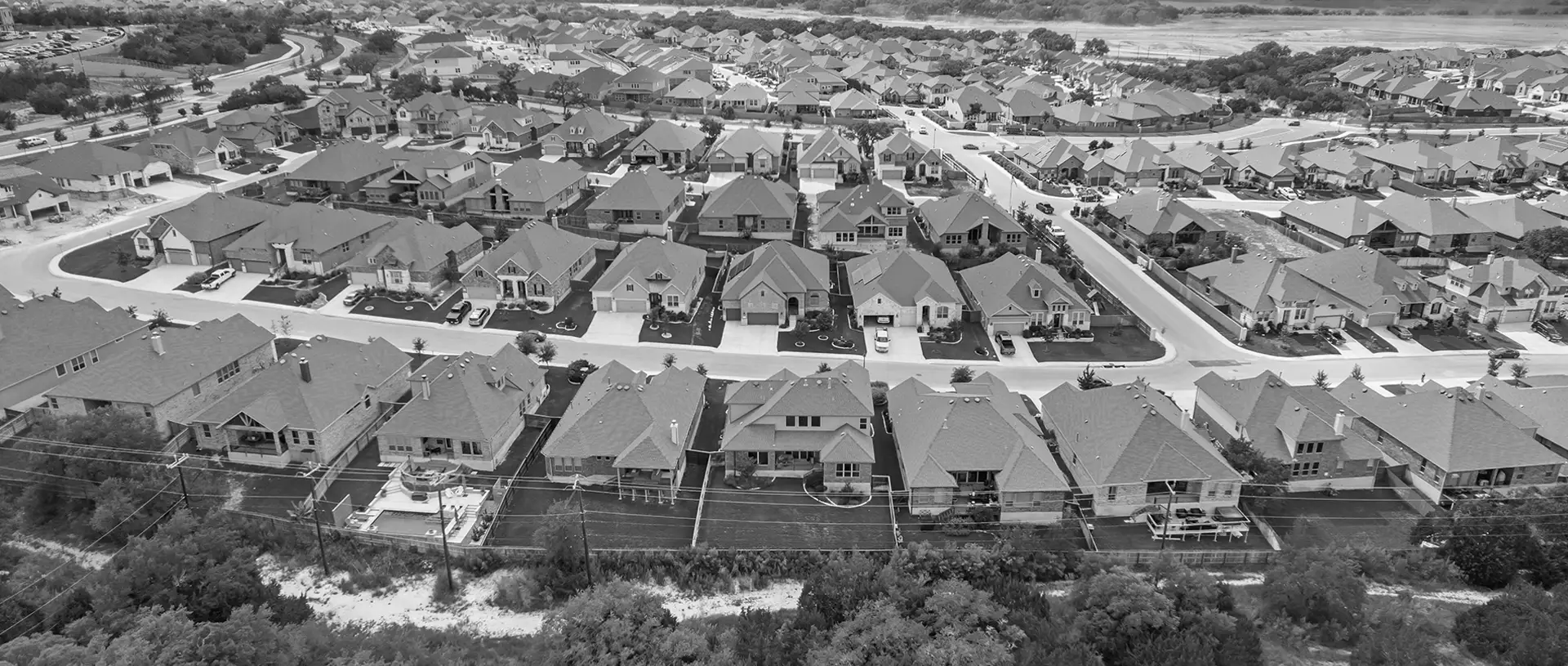
Roofers in Fayetteville, Arkansas: Historic Homes to New Builds
Eleven National Register historic districts. A university campus surrounded by decades of student-rental stock. Steep-pitch roofs from the 1850s through last year's permits. We work on all of it.
Eleven Historic Districts, Eleven Sets of Problems
The original Fayetteville town site was a 160-acre federal patent signed by President Andrew Jackson on February 27, 1835. That tract, bounded roughly by College, Gregg, Dickson, and South, became the core around which the city grew. Today, eleven separate neighborhoods hold National Register historic district designations, each with its own era of construction and its own dominant roof styles.
A roof on a home built in the 1870s is not the same job as a roof on a home built in the 1920s. Framing dimensions changed. Decking materials changed. Strip a pre-1900 house and you may find skip-sheathing under wood shakes, rough-sawn boards with irregular spacing. A 1920s cottage on Mount Sequoyah might have tongue-and-groove decking still solid if it stayed dry. A 1950s ranch on the east side might have first-generation plywood sheathing, delaminated after decades of moisture cycling.
We have been roofing homes across Northwest Arkansas for over 25 years, established in 1998. Our primary office is at 15170 U.S. 62, Garfield, AR 72732, about 30 minutes from downtown Fayetteville. Every crew we send knows how to evaluate old decking and identify structural problems before they become expensive surprises.
Roofing a Home on Mount Sequoyah
Mount Sequoyah began as a Methodist summer retreat in the 1920s, and many of its original cottages still stand. These are small-footprint houses with steep gable roofs, narrow eaves, and limited attic ventilation. Several still carry wood-shake or slate roofing, or they did until a previous owner replaced the original material with asphalt shingles without addressing the ventilation underneath.
The mountain's elevation creates access challenges. Driveways are steep and narrow. Mature trees press tight against rooflines, dropping leaves and moisture into valleys. Staging materials on a Mount Sequoyah lot takes more planning than a flat subdivision driveway.
When you want to restore a roof to its original material, wood shake or slate, we can do that. When the goal is a modern architectural shingle that costs less to maintain, we match profiles and colors that respect the character of the house. Either way, the decking evaluation comes first. If the boards underneath are failing, no shingle on top will save you.
Dickson Street and the Older Core
Dickson Street is named for Joseph L. Dickson, who arrived in the 1840s. The commercial district is well known, but the blocks immediately north and south contain some of the oldest surviving residential structures in the city. Headquarters House, at 118 E. Dickson, was built around 1850 and served both Union and Confederate forces during the Civil War. The surrounding blocks hold houses from the 1870s through the 1910s that still function as primary residences.
Roof work in this part of town means steep pitches, complex geometry, and materials that a production roofer may not recognize. Original standing-seam metal, wood shakes with hand-forged nails, slate with copper flashing, we have seen all of it within a few blocks of the square. Replacement does not always mean shingles. If the roof structure was designed for slate weight, stripping it and installing lightweight shingles without adjusting support can create problems the original builder already solved.
We work with homeowners in the older core to understand what the house needs structurally before we talk about what goes on top. That conversation is free.
Student Rentals and Deferred Maintenance
The University of Arkansas drives a large rental market. Houses near campus, along College Avenue, in the Mission District, in Happy Hollow, have been rentals for decades. Tenants report leaks to a property manager. The manager sends a handyman. The handyman patches with tar or caulk. That cycle repeats until the decking rots through.
We work with landlords and property managers who own multiple rental houses and need a roofer who can inspect all of them, prioritize by urgency, and schedule replacements around tenant turnover. A full tear-off and reroof in July, between lease periods, is the cleanest approach. We can often do a standard rental house in one to two days.
If you own rental property near campus and you have not had the roofs inspected in the last five years, call us. The cost of a full replacement is almost always less than the accumulated cost of emergency patches and interior drywall repair. Our transferable lifetime workmanship warranty stays with the property, so future buyers inherit the coverage.
Neighborhoods Across Fayetteville
Downtown Fayetteville
The blocks surrounding the historic square hold the densest concentration of pre-1900 structures. Lots are narrow, roof pitches are steep, and staging here requires more planning than a suburban tear-off.
Dickson Street
Houses from the 1850s through the early 1900s line the residential stretch. Roofs are steep-gable and cross-gable, some with wood-shake remnants under layers of later shingles. We strip to the deck on every Dickson Street job.
College Avenue
Houses range from early 1900s bungalows near campus to 1960s ranches farther north. The older bungalows often have low-slope porch roofs that need different materials than the main roof, modified bitumen or TPO rather than shingles.
Crossover Road
The city's newer suburban growth corridor. Construction dates mostly from the 1990s forward, but many first-generation roofs are now 25 to 30 years old. Builder-grade three-tab shingles were standard on tract homes here, and they do not hold up as long as architectural shingles.
Mission District
A compact neighborhood just south of campus with a mix of Craftsman bungalows and small rental houses. Mature trees dominate, and moss and algae growth on north-facing slopes is common. We see a lot of premature granule loss on shaded roofs here, the shingles stay damp longer and break down faster.
Happy Hollow
A creek valley northwest of campus with homes tucked among steep terrain and heavy tree cover. Drainage matters here more than anywhere else in Fayetteville. Valleys collect debris, gutters clog fast, and water backs up under shingles if ice-and-water shield was skipped.
Wilson Park
Surrounding one of the city's oldest parks, homes here are primarily mid-century with a mix of original and once-replaced roofs. The park's open space creates higher wind exposure on the south and west faces where storms approach.
Mount Sequoyah
The historic retreat district on the hilltop east of downtown. Cottages from the 1920s through the 1950s, many with steep gable roofs and original decking. Elevation and exposure create higher wind loads than the valley neighborhoods below.
Hail in Washington County
Fayetteville sits in Washington County's hail corridor. In April 2011, golf-ball to baseball-sized hail crossed both Washington and Benton counties. On March 10, 2018, a long-track hail cluster ran roughly 250 miles from border to border across the state. In July 2018, an overnight supercell moved across eastern Benton and Washington counties, with the worst damage in the Elkins and Durham area east of Fayetteville.
Hail damage on a newer architectural shingle shows up as circular bruises where the granule layer cracks and the mat is exposed. On an older roof, especially pre-1960 stock in Fayetteville's historic districts, hail accelerates failures already underway. Brittle shingles crack through. Wood shakes split. Slate fractures. If your roof was marginal before a hailstorm, it is failing after one.
We handle the insurance claim process with you. Our inspectors document damage with photos and measurements that your adjuster needs. We do not inflate scope. We show you what we found, explain what needs replacement versus what can stay, and let you decide. Impact-resistant Class 4 shingles, Owens Corning Duration FLEX and CertainTeed NorthGate, reduce future hail damage and may qualify for an insurance premium discount.
Permits in the City of Fayetteville
Fayetteville requires a building permit for roof replacements. The permit process verifies compliance with the adopted edition of the International Residential Code. For homes in historic districts, the city's Historic District Commission may need to review proposed materials before a permit is issued.
We pull the permits. We schedule the inspections. We handle the paperwork. A roof installed without a permit creates problems when you sell the house or file an insurance claim. Every roof we install in Fayetteville is permitted and inspected.
Free Inspection, No Pressure
Call (479) 398-6262 or book a free inspection online. We will come to your house, get on the roof, and tell you what we see. You get a written estimate with line items: materials, labor, permits, cleanup, and no pressure to sign on the spot. If your roof has five more years of life, we will tell you that too.
We carry a transferable lifetime workmanship warranty on every roof we install. Our Garfield office is a short drive away, and our crews work in Fayetteville every week.
Get Your Free Roof Inspection
We look at your roof for free, tell you what we find, and let you decide. No pressure, no obligation.