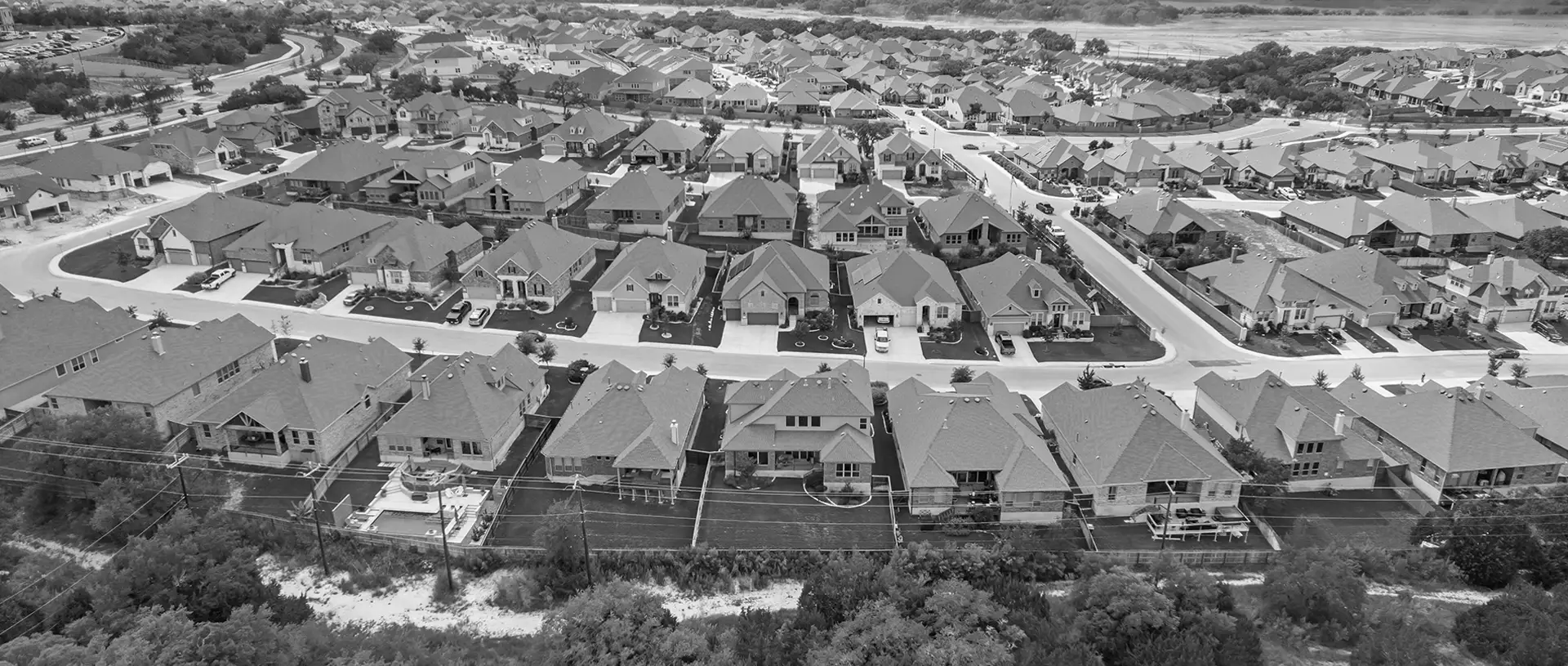
Mountain Home Roofing on the Twin Lakes
The farthest town we serve. An hour east of our Harrison office, up on the Ozark plateau between Bull Shoals Lake and Norfork Lake. We make the drive because this area needs a roofer who does not leave after the first storm season.
The Farthest Town We Serve, and Why We Still Come
Mountain Home is not next door. From our Harrison office at 1410 Capps Rd, it is about an hour east on Highway 62 and Highway 5. That is a real drive, and we will not pretend otherwise. We come because Baxter County does not have enough permanent roofing contractors to serve the population, and the ones who show up after storms tend to disappear before the warranty matters.
American Exteriors has been in business since 1998, over 25 years. We are not based in Mountain Home, and we will not claim to be. We are based in Garfield and Harrison, and we drive to Mountain Home because we have customers here who need us to come back when something goes wrong. Every roof we install carries a transferable lifetime workmanship warranty. That warranty is only worth something if the company is still around to honor it. We are still around.
Mountain Home was originally called Rapp's Barren, then Talbert's Barren, "barren" being the old Ozark term for an open, grassy plateau. The town was incorporated on July 2, 1888, and became the seat of Baxter County in 1873, the year the county was created. The county was named for Elisha Baxter, who was governor of Arkansas at the time. This is a place with its own identity and its own weather patterns, separate from the NWA metro. It is not a suburb of anything. We treat it that way.
Wind Off Bull Shoals and Norfork
Mountain Home is known as the Twin Lakes Area. Bull Shoals Lake sits to the north and east. Norfork Lake sits to the south and east. Bull Shoals Dam was completed in 1951, Norfork Dam in 1944. The lakes turned this stretch of the Ozarks from hardscrabble plateau into a recreation and retirement region. They also changed the local weather.
Large bodies of water create their own wind patterns. Air moves across the lake surface with nothing to slow it down, no trees, no hills, no buildings, and arrives at the shoreline with speed. Lakefront homes on Bull Shoals and Norfork take sustained wind loads that properties a mile inland never see. Ridge caps lift. Starter strips peel. Drip edge bends back. On an older roof, a single windstorm can open enough gaps to let water in for months.
We use high-wind fastening patterns and reinforced ridge caps on every lakefront job. On homes with direct exposure to the prevailing wind direction, we upgrade to six-nail patterns instead of four. The difference in material cost is small. The difference in performance during a 60-mph gust is not small at all.
Ozark Winters on a Plateau
Mountain Home sits on the Ozark plateau at roughly 800 feet. It gets the full north Arkansas winter: ice, snow, freezing rain, and temperature swings that cycle above and below 32°F for weeks at a time. The January 2009 ice storm dropped one to two inches of ice accretion across this region. Roughly 300,000 residences lost power. Some were dark for nearly three weeks.
Ice accretion on a roof does two things. It adds weight, a uniform inch of ice across a 2,000-square-foot roof adds roughly 1,000 pounds. And it creates dams at the eaves. Heat escaping through the attic melts snow on the upper slope. The meltwater runs down to the cold eave overhang, refreezes, and builds a ridge. More water pools behind that ridge with nowhere to go and backs up under the shingles.
Every full replacement we do in the Mountain Home area includes ice-barrier underlayment along the eaves, in the valleys, and around penetrations. This is a self-sealing membrane, when a roofing nail passes through it, the membrane seals around the shank. Water cannot follow the nail hole into the decking. Arkansas code requires this underlayment where January mean temperatures drop below freezing, and Mountain Home qualifies. We also inspect the attic for insulation gaps and ventilation problems, because the ice dam cycle starts with heat loss through the ceiling.
Roofing for Retired Homeowners
Starting in the 1950s and 1960s, after the dams were built and the lakes filled, Mountain Home became a retirement community. People came for the scenery, the clean air, the fishing, and the low housing costs. That trend continues. Baxter County's median age is well above the state average, and a large share of homeowners here are on fixed incomes.
A roof replacement is one of the most expensive things that can happen to a house. For someone living on Social Security and a pension, a $12,000 bill is not just inconvenient, it can be a crisis. Insurance exists to cover storm damage, but navigating the claims process is not easy. Adjusters speak a different language. Denials happen. Supplements get lost in the system.
We handle the insurance paperwork on storm-damage jobs. We meet with the adjuster on your roof, document the damage with photos, and make sure the scope of work matches what the roof actually needs. If the adjuster's initial estimate misses something, we file a supplement. You do not have to argue with your insurance company yourself. We have been doing this for over 25 years, and we know what a fair claim looks like.
This is not a sales pitch. If the damage does not justify a claim, we will tell you. If the roof has another five years of life, we will tell you that too. We would rather earn your trust with honesty than earn a commission on a job you did not need.
Around the Twin Lakes
Downtown Mountain Home
The original town center around the Baxter County Courthouse. Mountain Home became the county seat in 1873, the same year the county was created. The oldest homes in this area date to the late 1800s, with hand-framed roofs and rough-sawn decking. The commercial buildings around the courthouse have flat and low-slope roofs that require different materials: modified bitumen or TPO instead of shingles. We handle both residential and commercial roofing.
Big Creek
The rural properties along Big Creek south of town. This is lowland terrain with heavy tree cover and persistent humidity. Moss and algae grow fast on north-facing roof slopes in this environment. We install algae-resistant shingles as our default product for creek-bottom properties. The copper granules in the shingle surface inhibit growth and keep the roof from developing black streaks within the first few years.
Norfork Lake Area
The lakefront and near-lake homes east and south of Mountain Home. Norfork Dam was the first of the two, completed in 1944, seven years before Bull Shoals. Homes along Norfork Lake range from 1950s fishing cabins to modern custom builds. The older cabins often have original roofs that have been patched and re-patched for decades. At some point, patching stops working and the whole roof needs to come off. The newer homes tend to have steeper pitches and more complex geometry, multiple ridgelines, dormers, covered porches, which means more flashing joints and more places for water to find a way in. We flash every transition with step flashing and counterflashing, not caulk.
College Hill
The residential area near Arkansas State University–Mountain Home. Housing stock here is a mix of rental properties and owner-occupied homes, mostly built from the 1970s through the 1990s. Rental properties tend to get deferred maintenance, the roof is the landlord's problem until it becomes the tenant's ceiling leak. We work with property owners and landlords to inspect and replace roofs before the damage spreads to the interior. A roof replacement is cheaper than a roof replacement plus drywall, insulation, and mold remediation.
Eastgate
The commercial and residential development along Highway 62 east of town, toward the lakes. This corridor has grown steadily as the Twin Lakes Area draws more retirees and tourism. Newer construction here generally has architectural shingles on engineered trusses, standard work that we do every day. The main concern on this side of town is wind exposure. The terrain opens up east of Mountain Home, and homes on the higher ground catch wind that the sheltered streets closer to the courthouse do not.
West Mountain Home
The neighborhoods west of Highway 5, stretching toward Gassville and Lakeview. Properties here sit on the plateau above the White River valley. The terrain drops off sharply to the south, and homes on the edge of that drop get wind from below, updrafts that hit the soffit and eave from underneath. This is the opposite of the typical wind pattern, and it catches roofers off guard if they are not familiar with plateau-edge construction. We secure the drip edge and starter strips on the windward eave with extra fasteners on these properties.
Free Inspection, No Sales Pitch
Call (479) 398-6262 or schedule online. We will drive out from Harrison, get on your roof, and photograph everything. You will get a written assessment with photos, not a verbal estimate from the driveway. If the roof is fine, we will say so and leave. If it needs work, we will explain what and why, and give you a price in writing.
We know we are asking you to hire a roofer from an hour away. That is a fair concern. Here is what we offer in return: 25 years in business, a transferable lifetime workmanship warranty, and a permanent office in Harrison that you can call any time something goes wrong. We are not going anywhere.
Get Your Free Roof Inspection
We look at your roof for free, tell you what we find, and let you decide. No pressure, no obligation.